
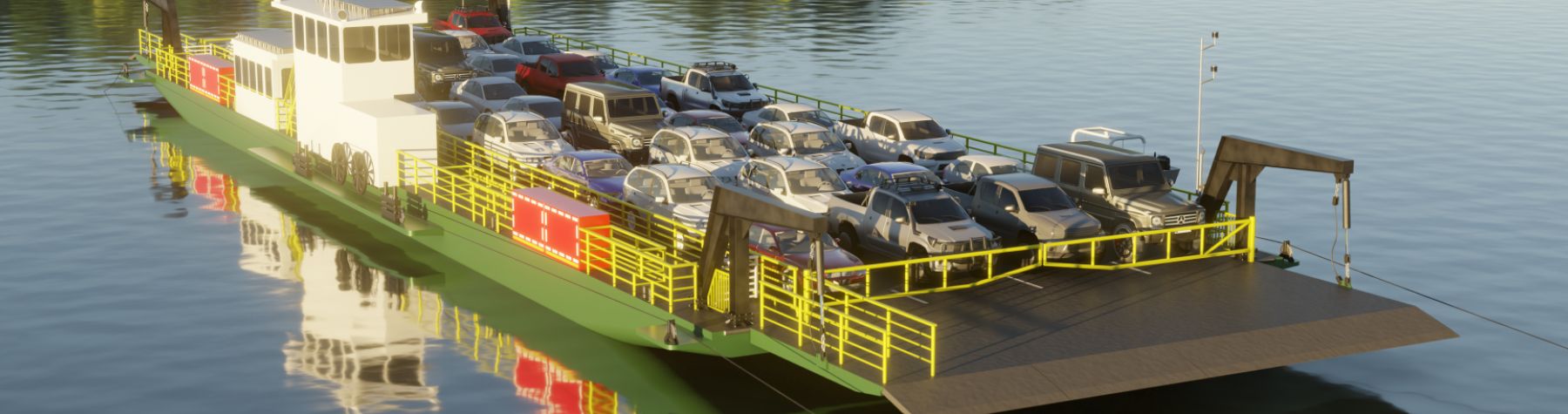
Building a Better Connection
Douglas Shire Council is delivering the Daintree Ferry Upgrade Program—one of the largest infrastructure investments undertaken north of the Daintree River.
The program consists of two major projects:
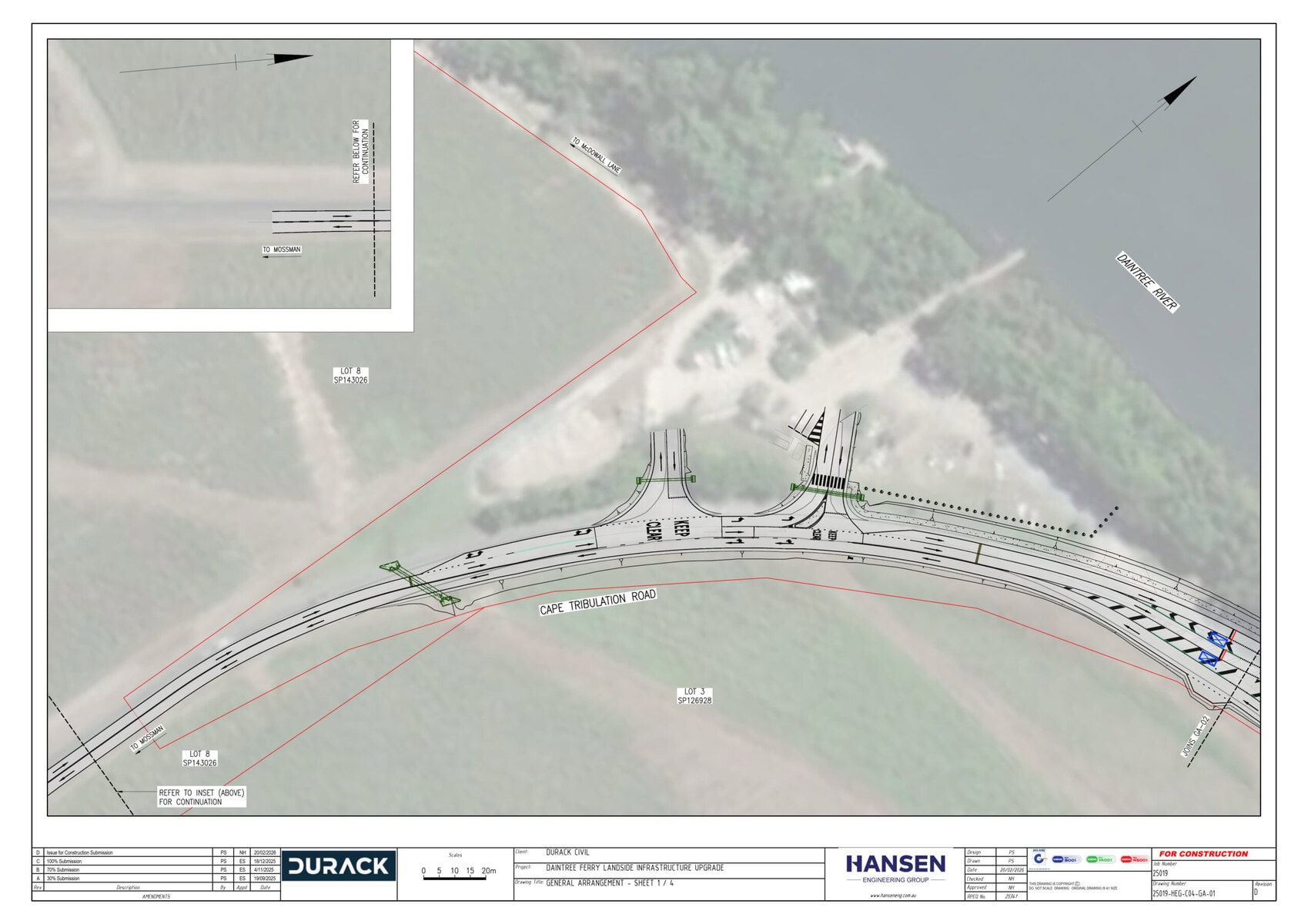
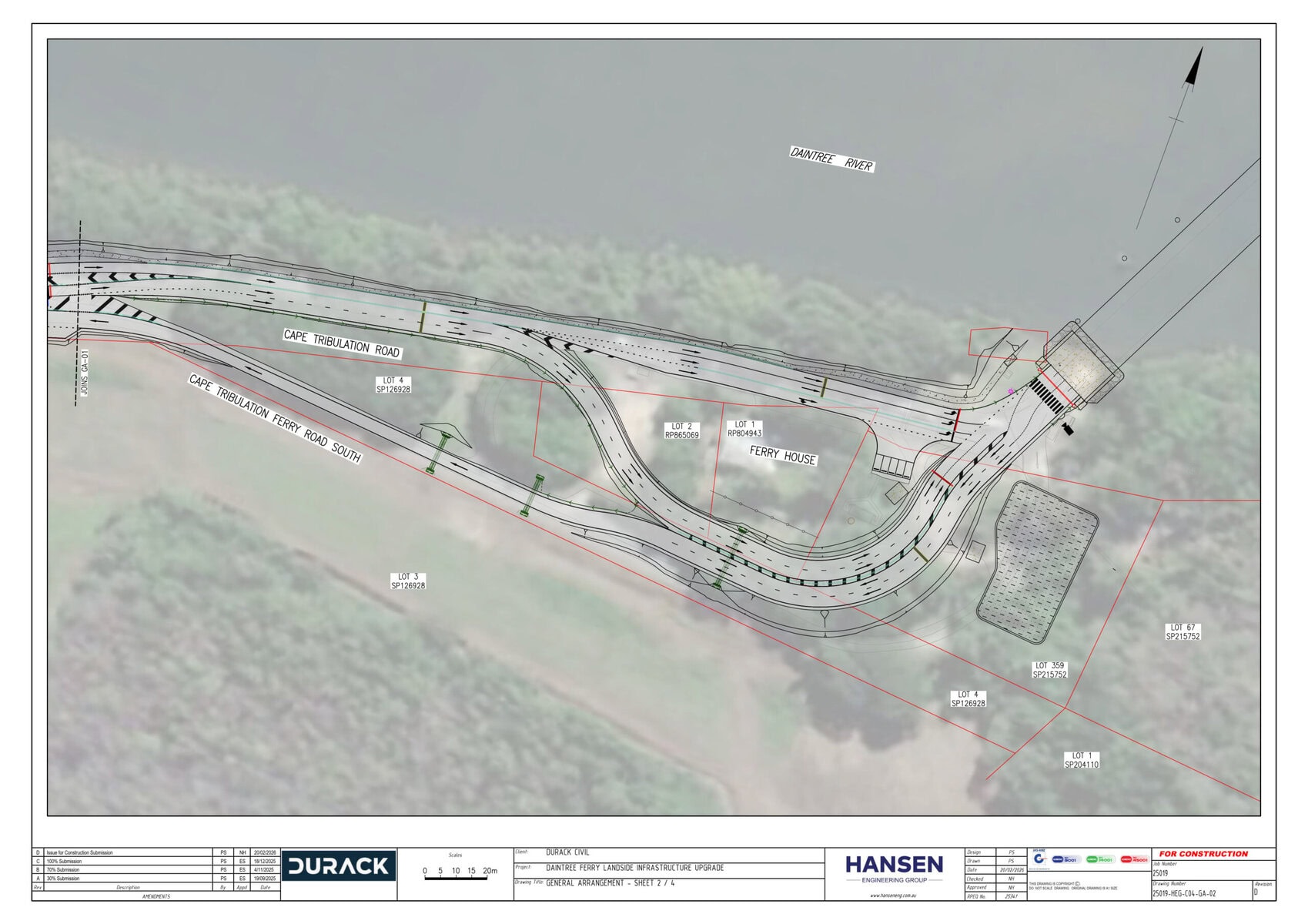
Landside Infrastructure Project – upgrading the roads, ferry approaches and traffic management on both sides of the river.
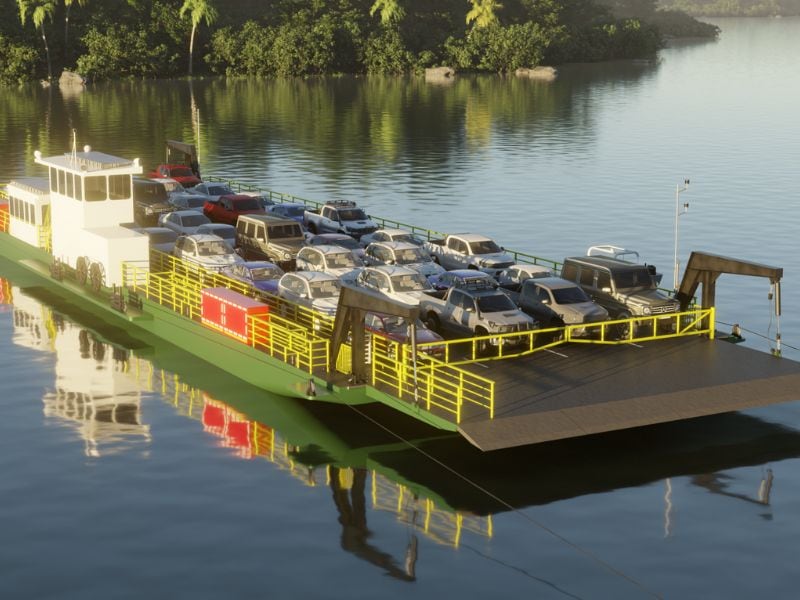
New Four-Lane Ferry – replacing the existing ferry with a larger, modern vessel designed to improve capacity, reliability and the overall customer experience.
Together, these projects will improve access for residents, businesses, emergency services and visitors while increasing resilience during severe weather and supporting the long-term future of the Daintree Coast.
Why are these works needed?
The Daintree Ferry is the only road crossing of the Daintree River and is a vital transport link for local communities, tourism, freight, emergency services and school transport.
As demand has grown over many years, the existing ferry approaches and traffic arrangements have become increasingly constrained.
The Daintree Ferry Upgrade Program has been developed to improve safety, reduce congestion, strengthen disaster resilience and provide a more efficient and reliable crossing for decades to come.
Protecting the Daintree Environment
The Daintree Ferry Upgrade Program has been carefully designed to minimise impacts on the surrounding World Heritage environment.
Before construction commenced, extensive environmental assessments, approvals and cultural heritage investigations were completed.
Where vegetation removal has been necessary to safely construct the upgraded infrastructure, rehabilitation and revegetation will form part of the project.
Douglas Shire Council is committed to delivering essential infrastructure while protecting the unique environmental values that make the Daintree one of the world’s most significant natural areas.
Why is there so much construction?
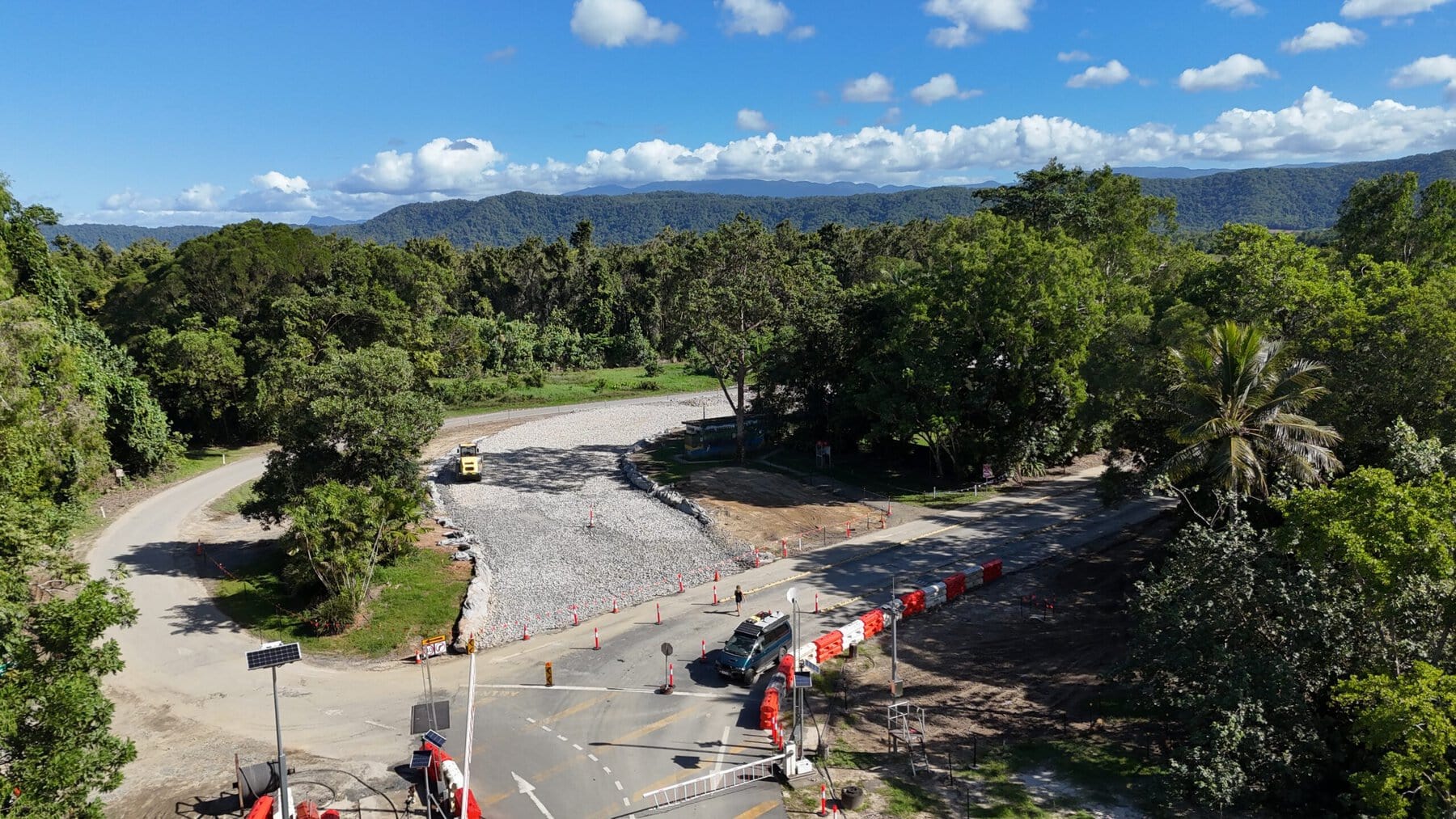
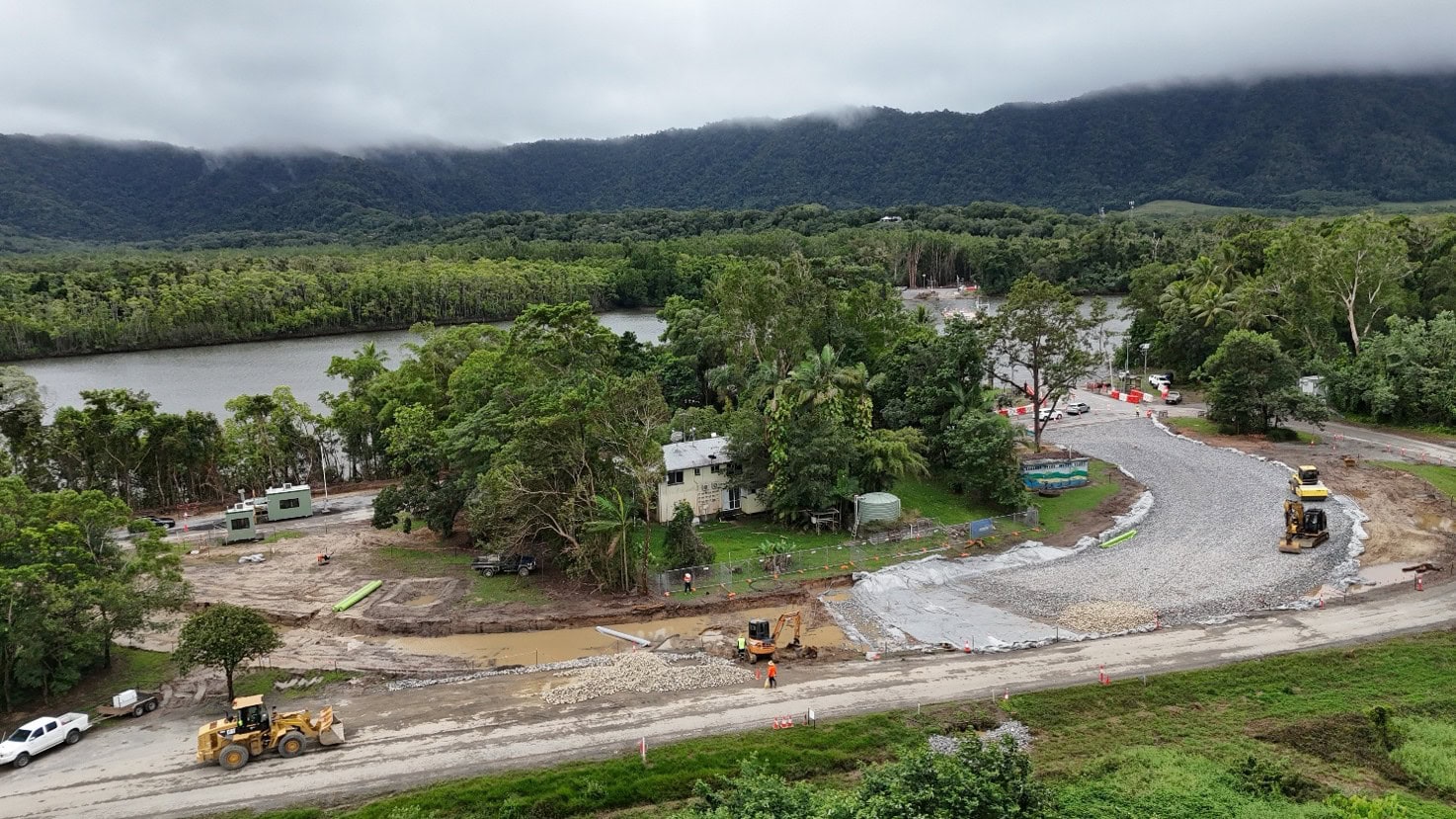
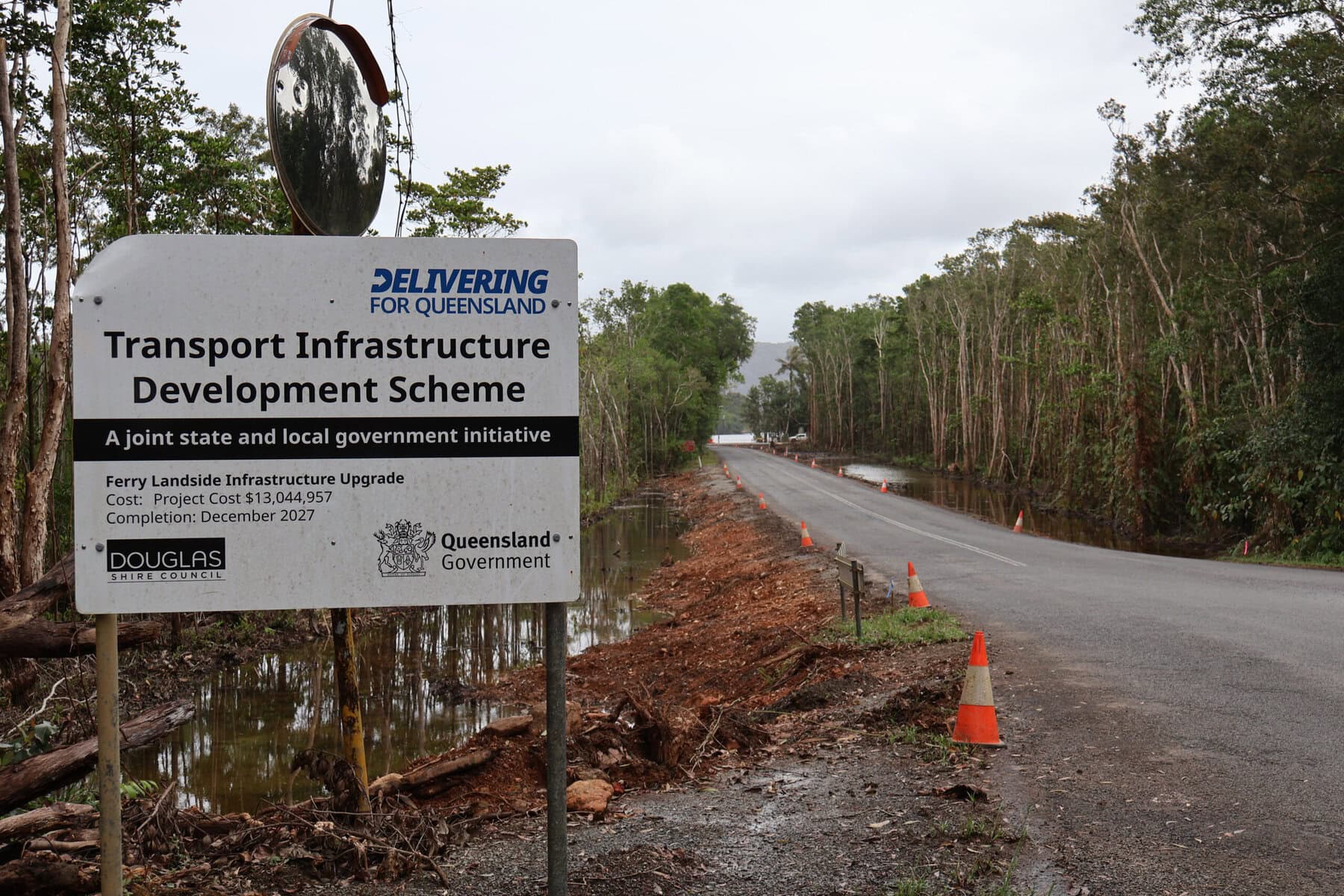
If you’ve recently visited the ferry precinct, you’ll notice vegetation clearing, earthworks and changes to the traffic layout.
These works are preparing the site for the new ferry approaches, upgraded traffic lanes and supporting infrastructure that will improve the safety, efficiency and resilience of the crossing.
Although the site may look quite different during construction, these works are the first stage of delivering a better ferry service for the future.
Latest Project Updates
Friday, 2 October 2026
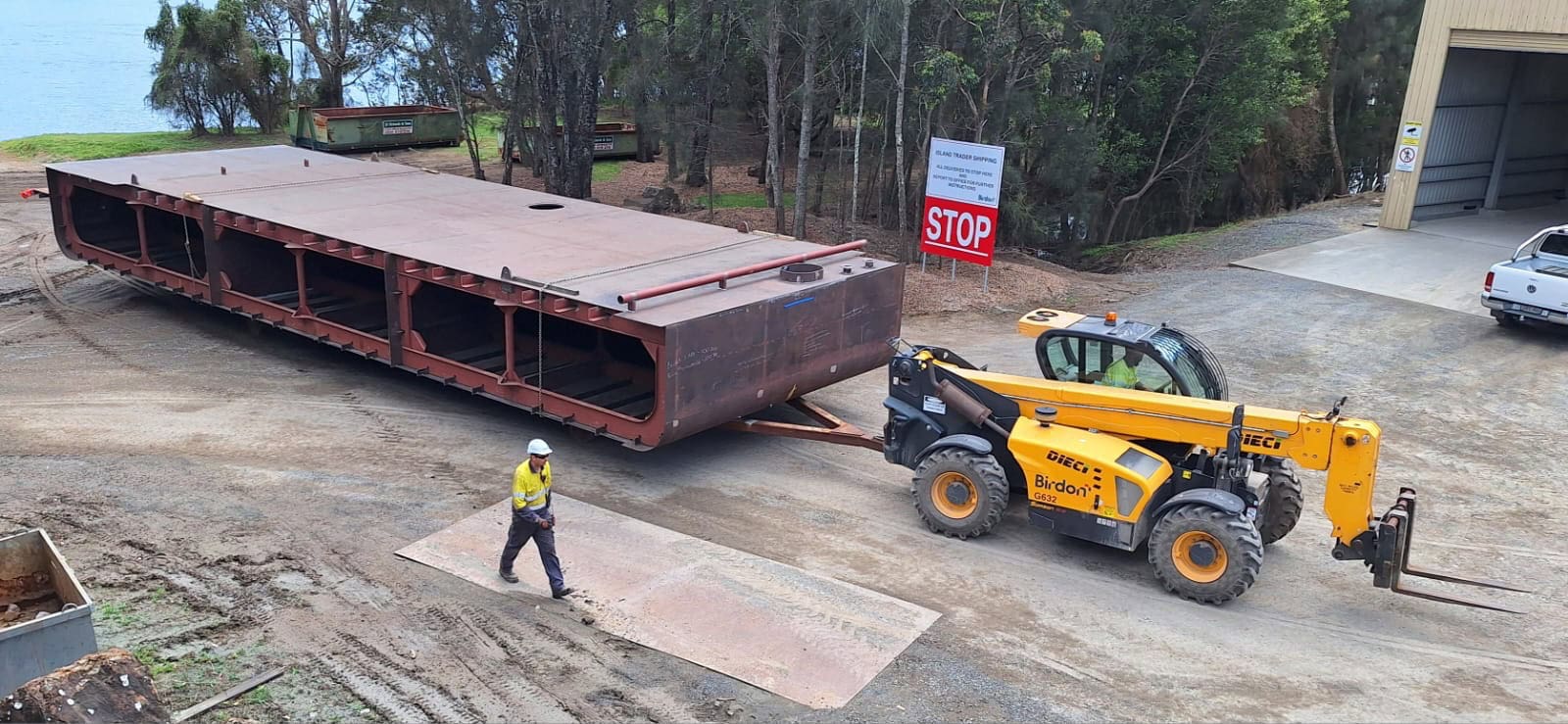
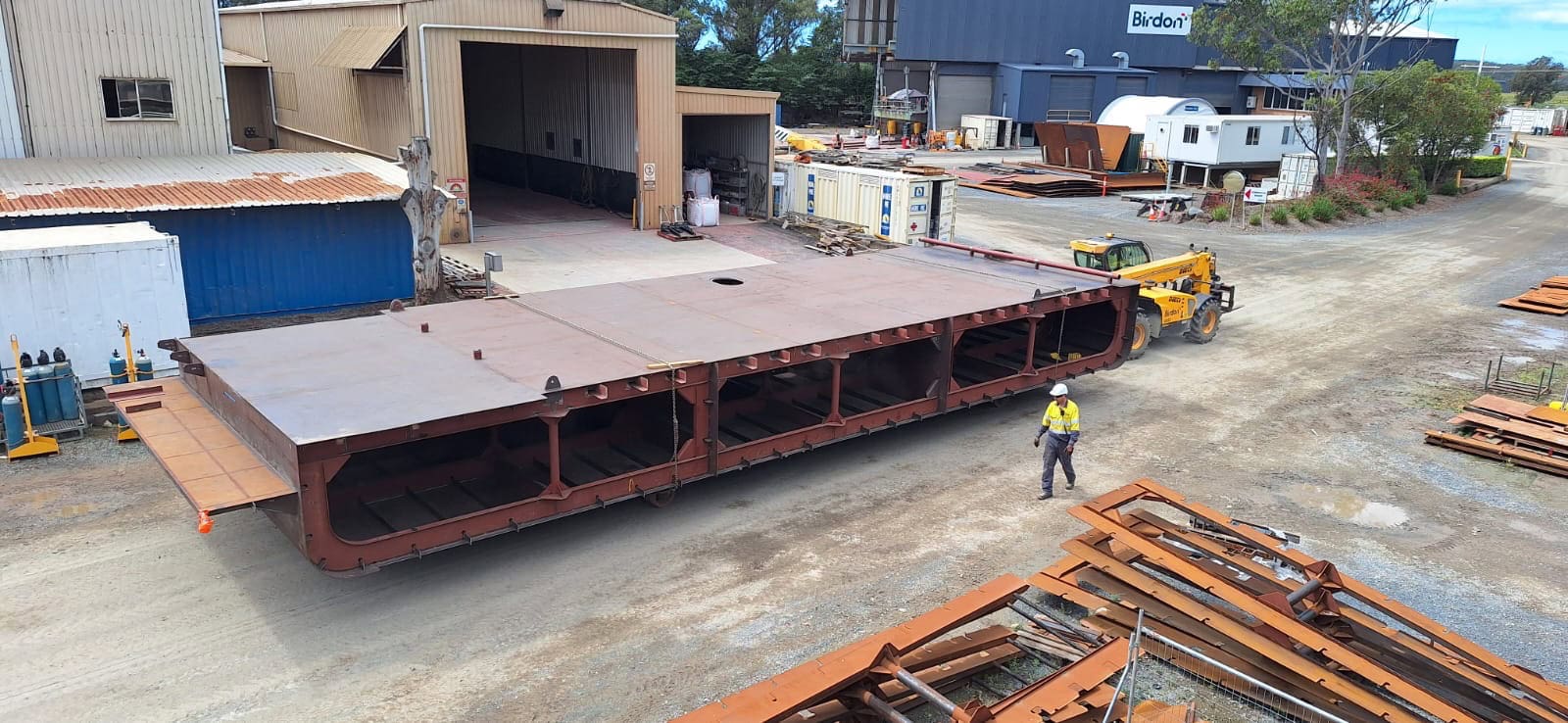
Construction of the new Daintree River Ferry continues to progress, with the project reaching another important production milestone.
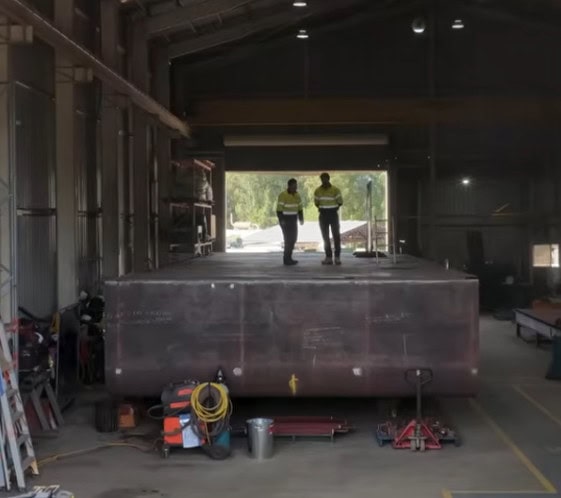
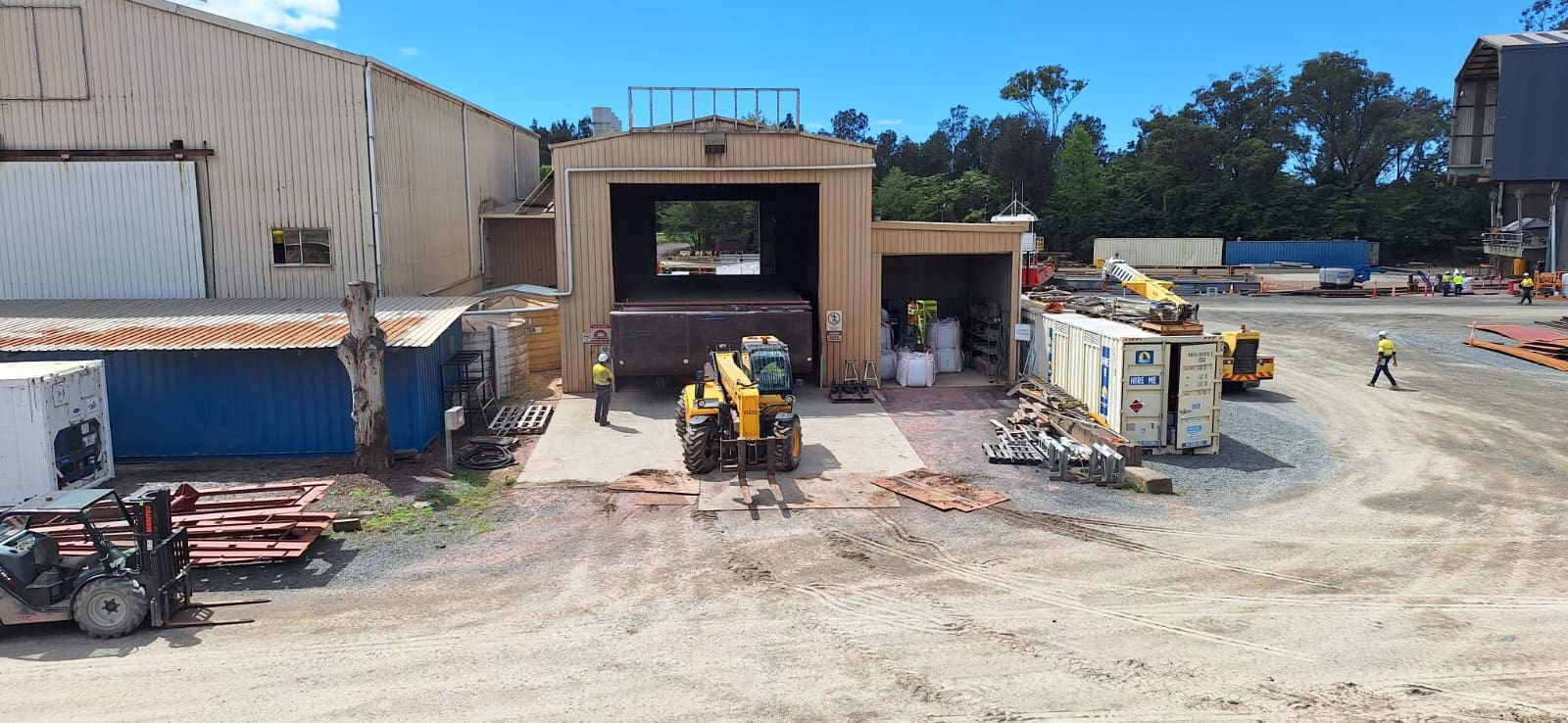
The first construction block has now been successfully transferred into the paint shed at Birdon’s Port Macquarie shipyard, marking the next stage in the vessel’s build.
The milestone follows steady progress by Birdon’s fabrication team, with a strong focus on quality as the vessel moves through each stage of construction.
The new four-lane, cable-drawn ferry will measure approximately 49 metres long and 17 metres wide, with capacity for up to 36 vehicles per crossing.
Birdon is delivering the new ferry under a 20-year contract with Douglas Shire Council, encompassing the design, construction, operation and maintenance of this important piece of regional transport infrastructure.
We look forward to continuing to share updates with our community as the new Daintree River Ferry takes shape.
Friday, 28 August 2026
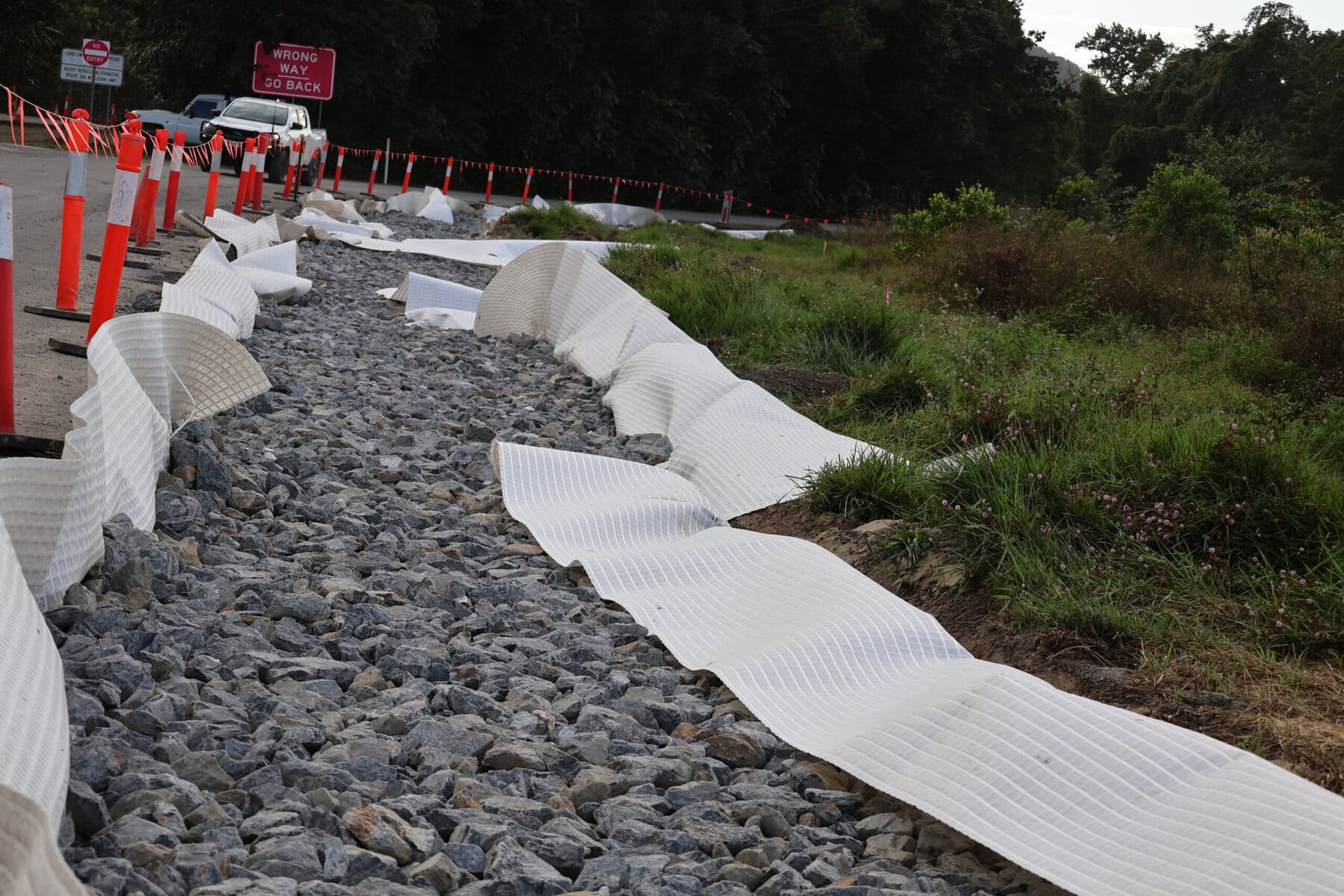
- Excavation is nearing completion, with rock placement underway on the northern side.
- Rock and fill placement is complete on the southern side and will continue on the northern side over the next four weeks.
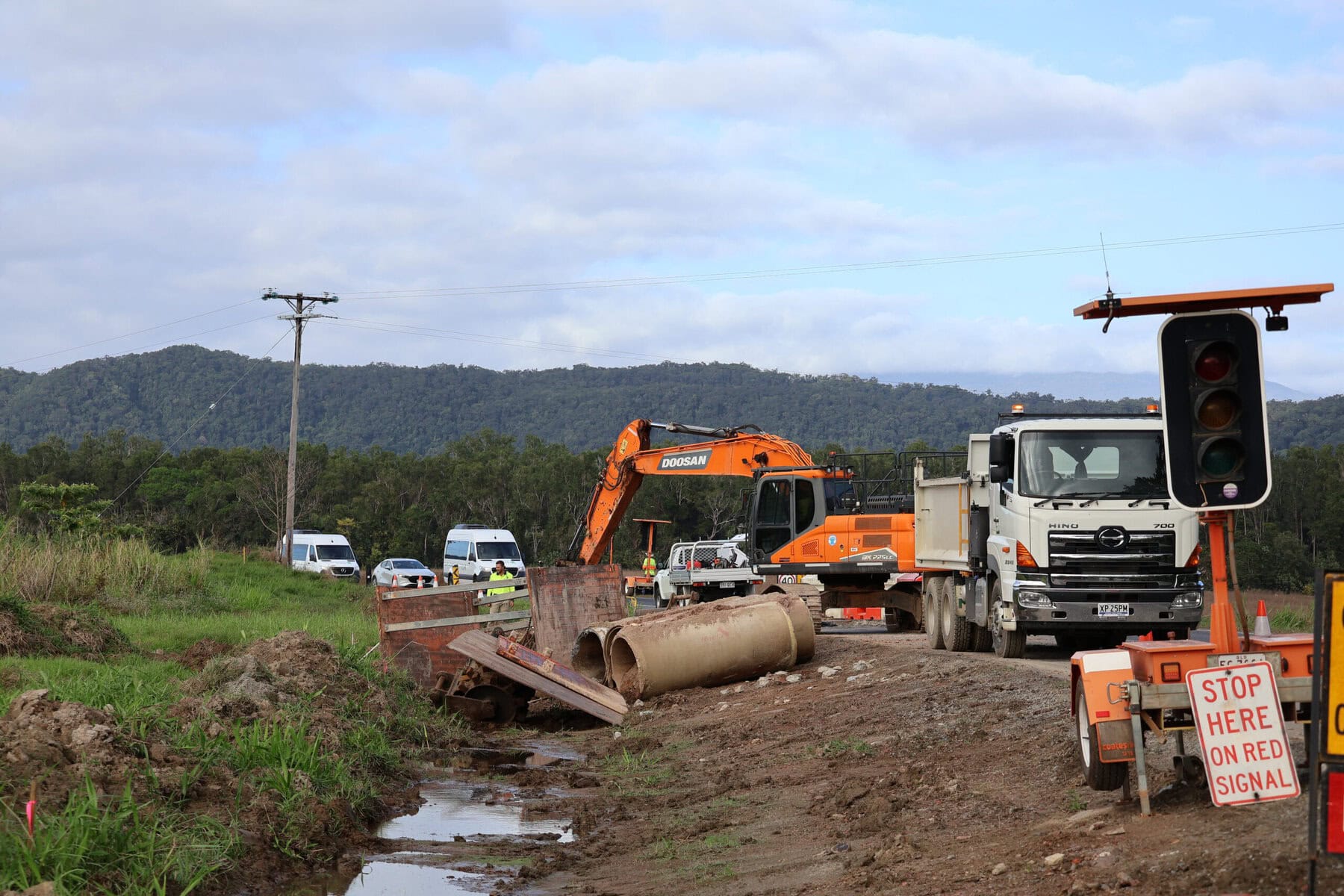
- Culvert replacement works are continuing, although wet weather has caused delays.
- Temporary single-lane traffic management will remain in place as required
- Vegetation removal has been completed.
- Interpretive signage has been installed on both sides of the river.
- The project remains on track for completion by the end of October 2026.
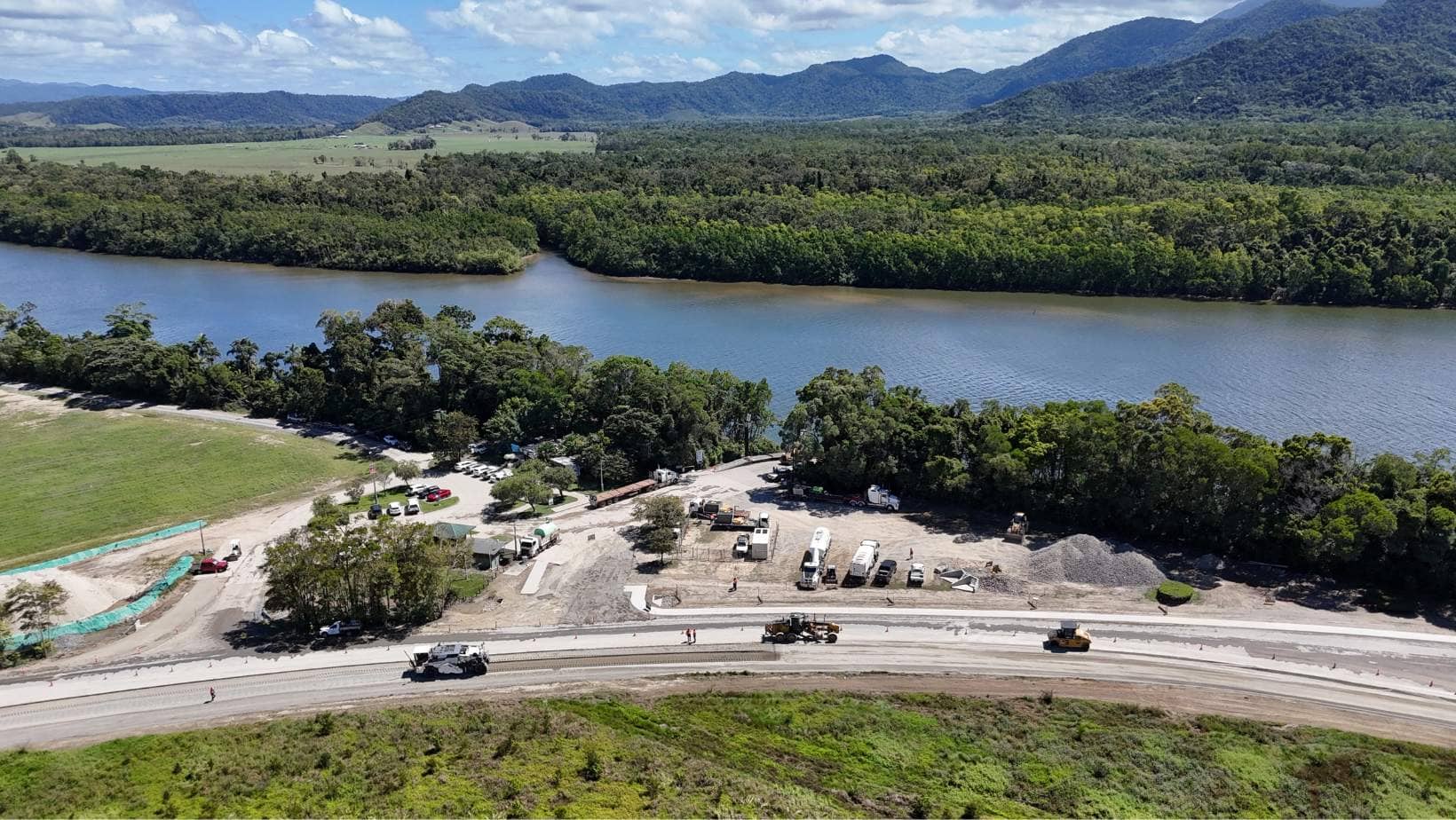
Monday, 10 August 2026
Daintree Ferry Landside Infrastructure
- Project remains on schedule.
- Works on the southern side are approximately 85% complete.
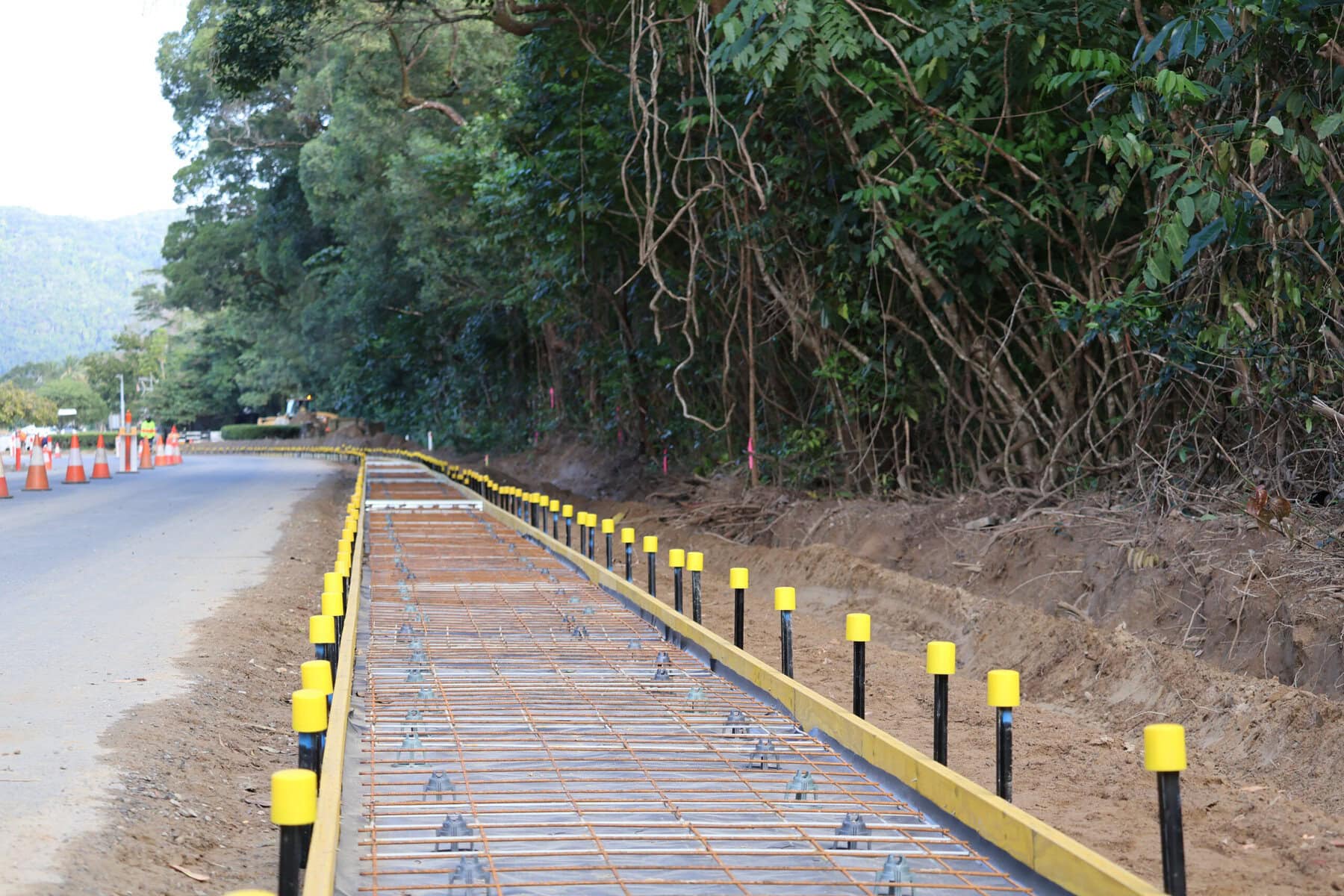
- The new pedestrian pathway between the crocodile tour car park and ferry landing has been completed.
- New ticket booth foundations have been installed.
- Initial works have commenced on the northern side.
- Challenging ground conditions have required additional rock to strengthen the new road areas.
Upcoming Works
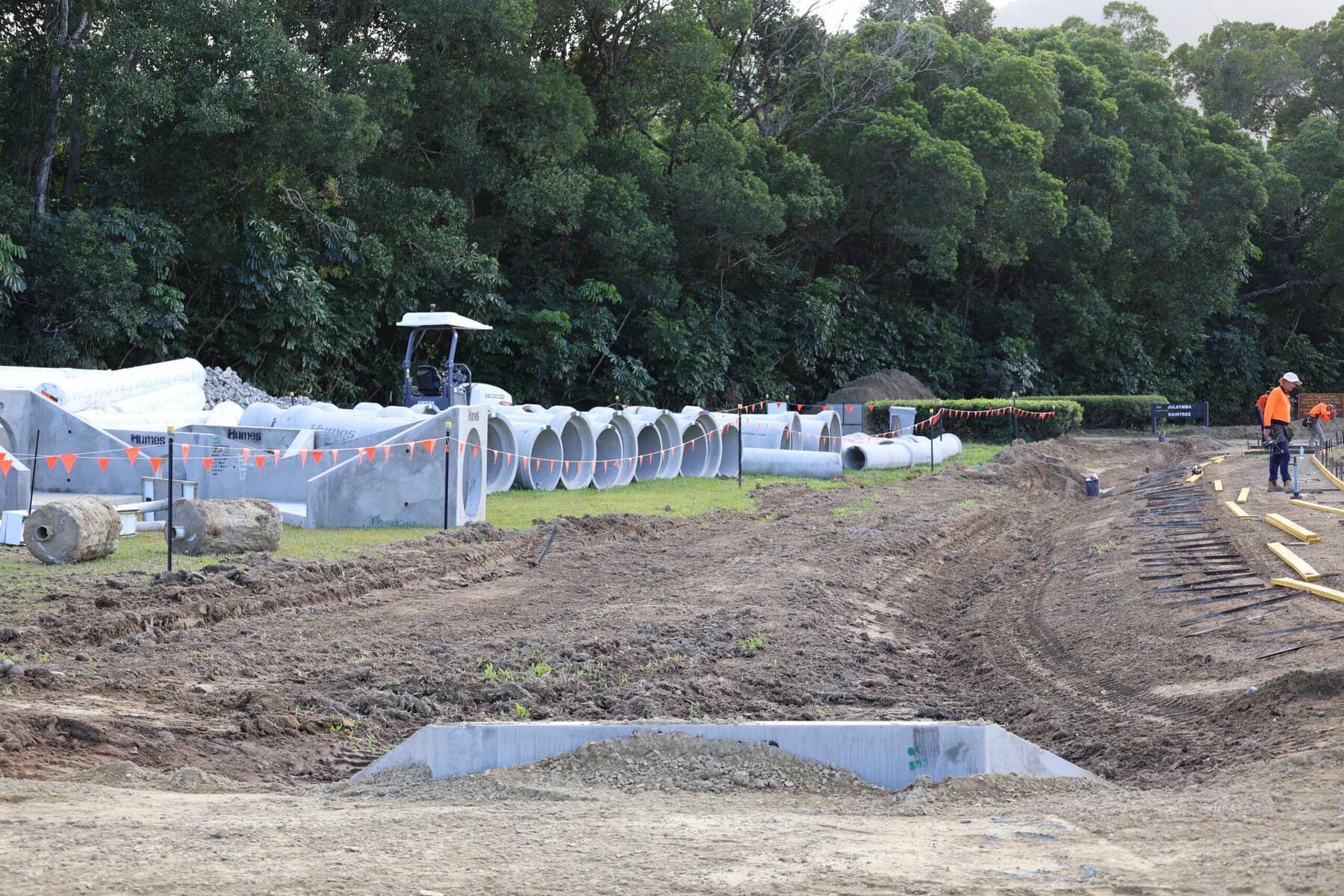
- Complete drainage works on the southern side.
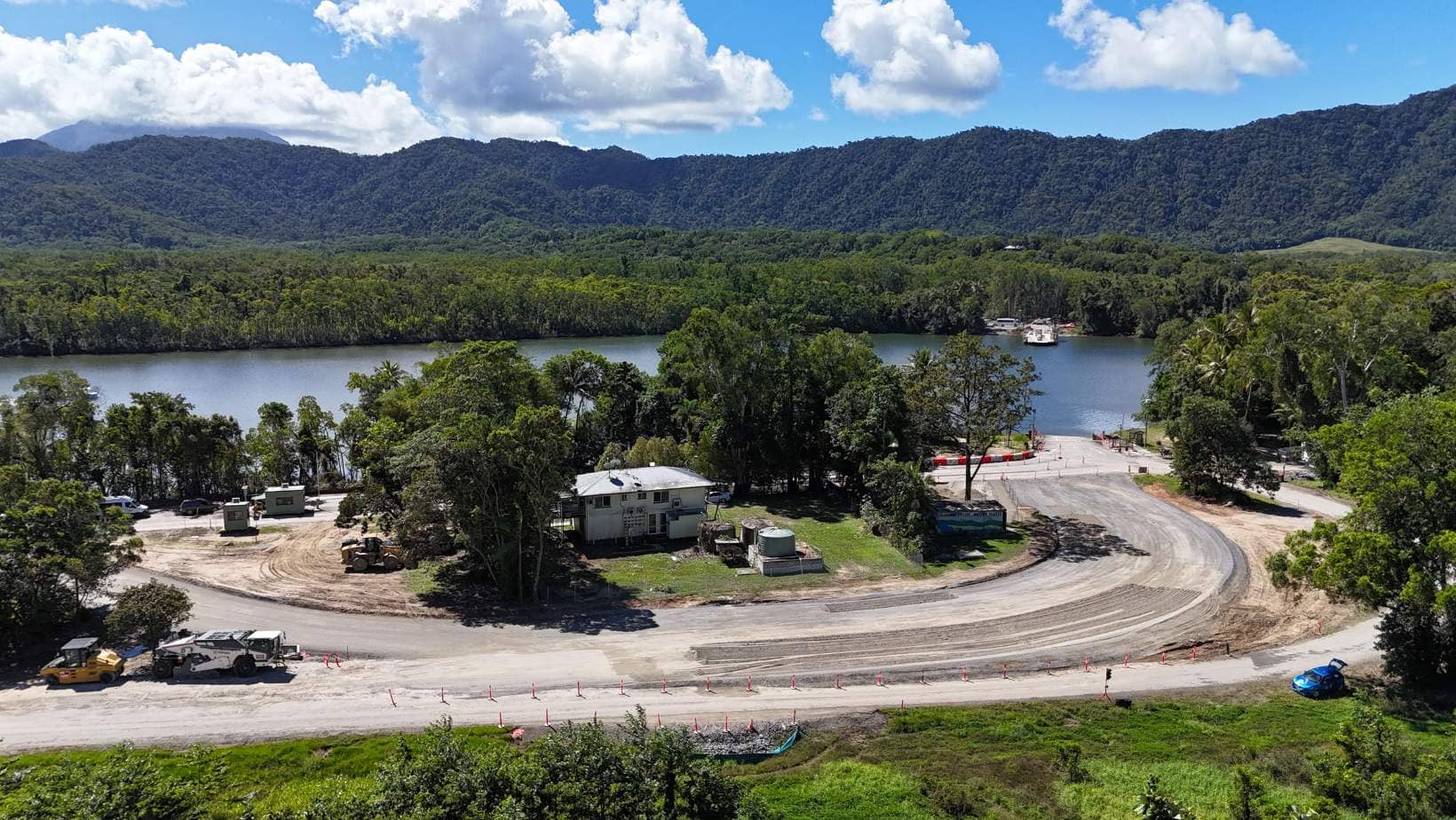
- Lay road base and prepare the new southern lanes for sealing.
- Continue construction of the new northern lanes.
- Relocate the ticket booths and pedestrian shelters.
Motorists should continue to expect delays while travelling through the work area and follow the directions of traffic controllers.
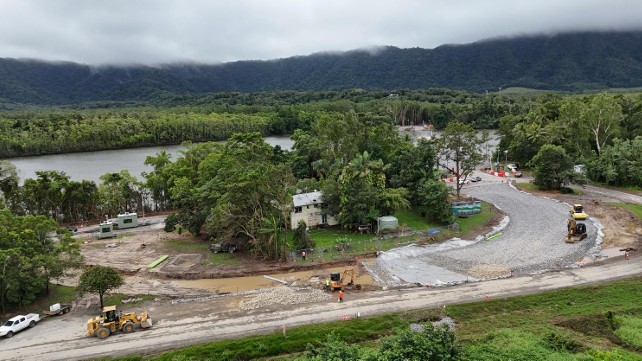
Indicative Timeline – Landside Infrastructure
February – June 2026
- Planning complete and construction commenced, including design approvals, cultural heritage agreements, contractor mobilisation, vegetation clearing and establishment of traffic management.
July – August 2026
- Subgrade excavations
- Installation of larger culverts
- Embankment fill and ground treatments
September – October 2026
- Electrical conduits and underground services
- Road primer and sealing works
- Reseal of existing road
- Line marking, speed humps and signage
- Installation of boom gates and curtain gates
Mid-October 2026 – June 2027
- Demobilisation
- Works pause until maritime civil works commence mid-2027
Community Reference Group
Douglas Shire Council established the Daintree Coast Community Reference Group to provide two-way communication throughout delivery of the project.
The group includes residents, businesses and community representatives and receives regular updates on:
- Road recovery projects
- Ferry Upgrade Program
- Disaster recovery initiatives
- Community access issues
Meeting notes and newsletters can be viewed here.
[Link to Daintree Coast Updates page]
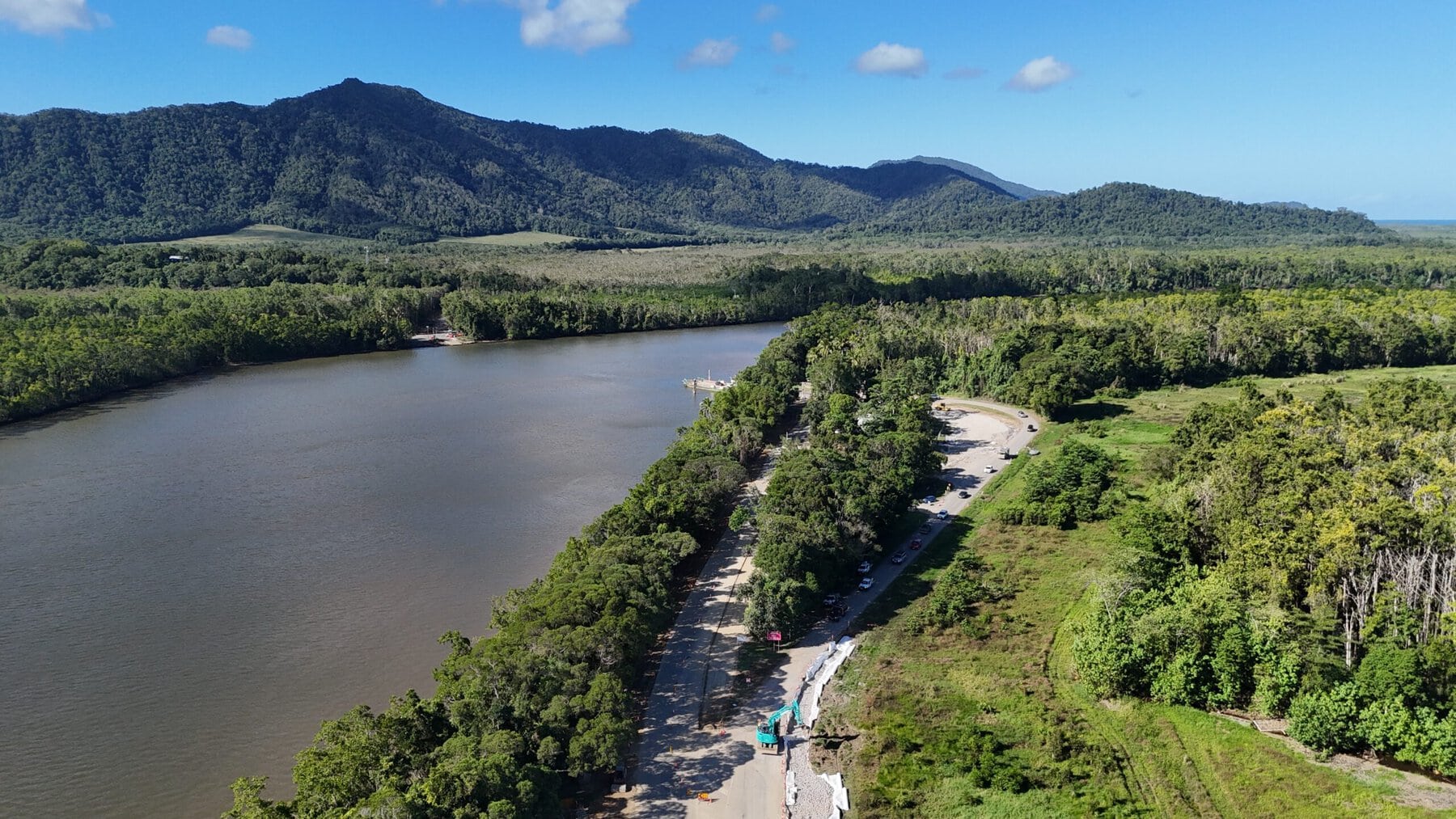
Landside Infrastructure Construction Gallery
See how construction is progressing.
Ferry Build Gallery
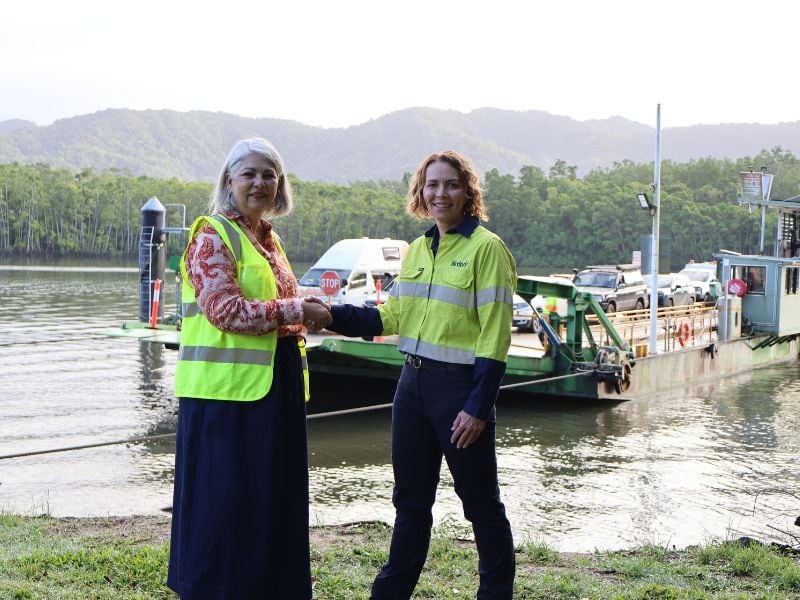
See how the progress of the ferry from concept through to construction is progressing.
Concept Plans
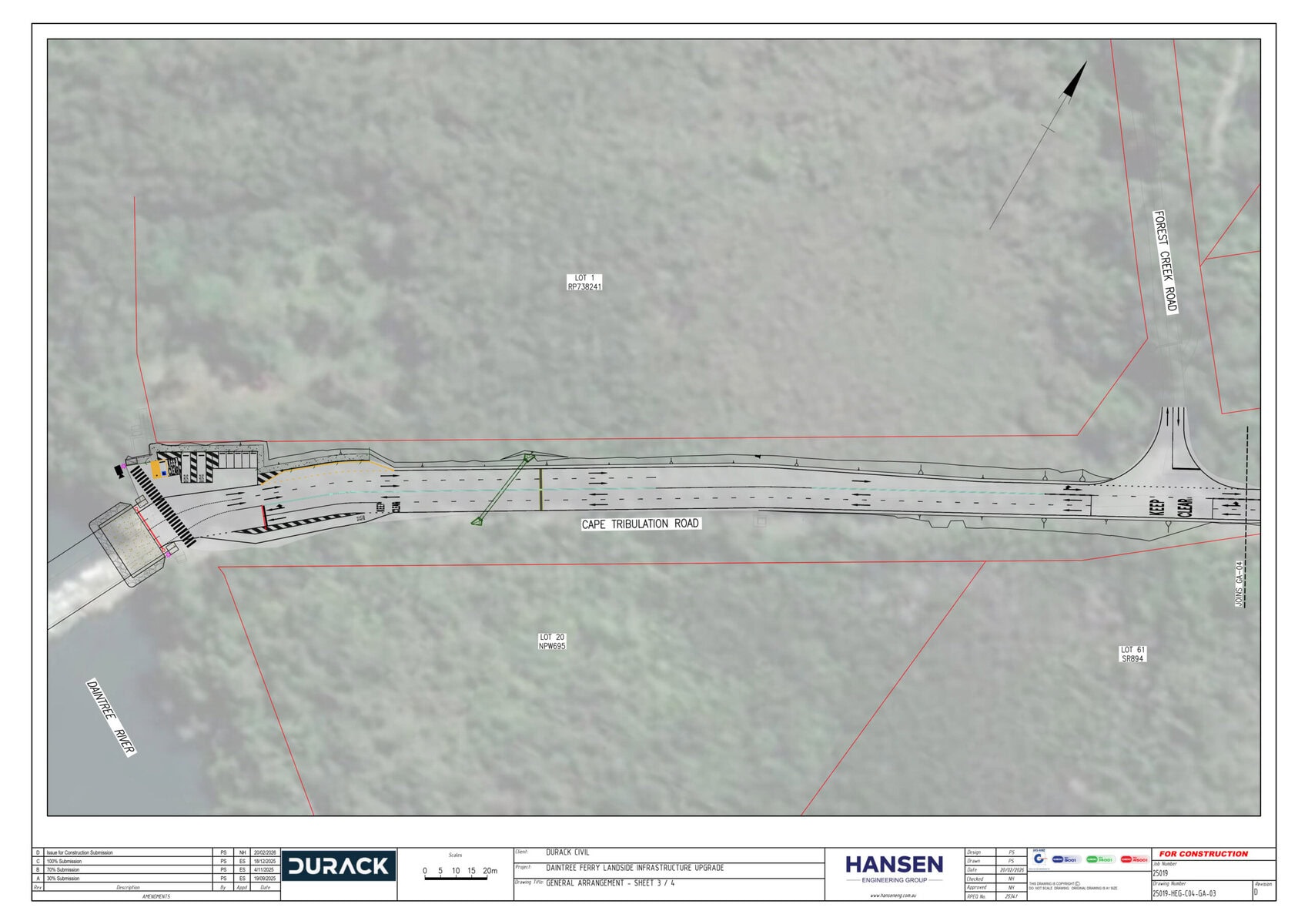
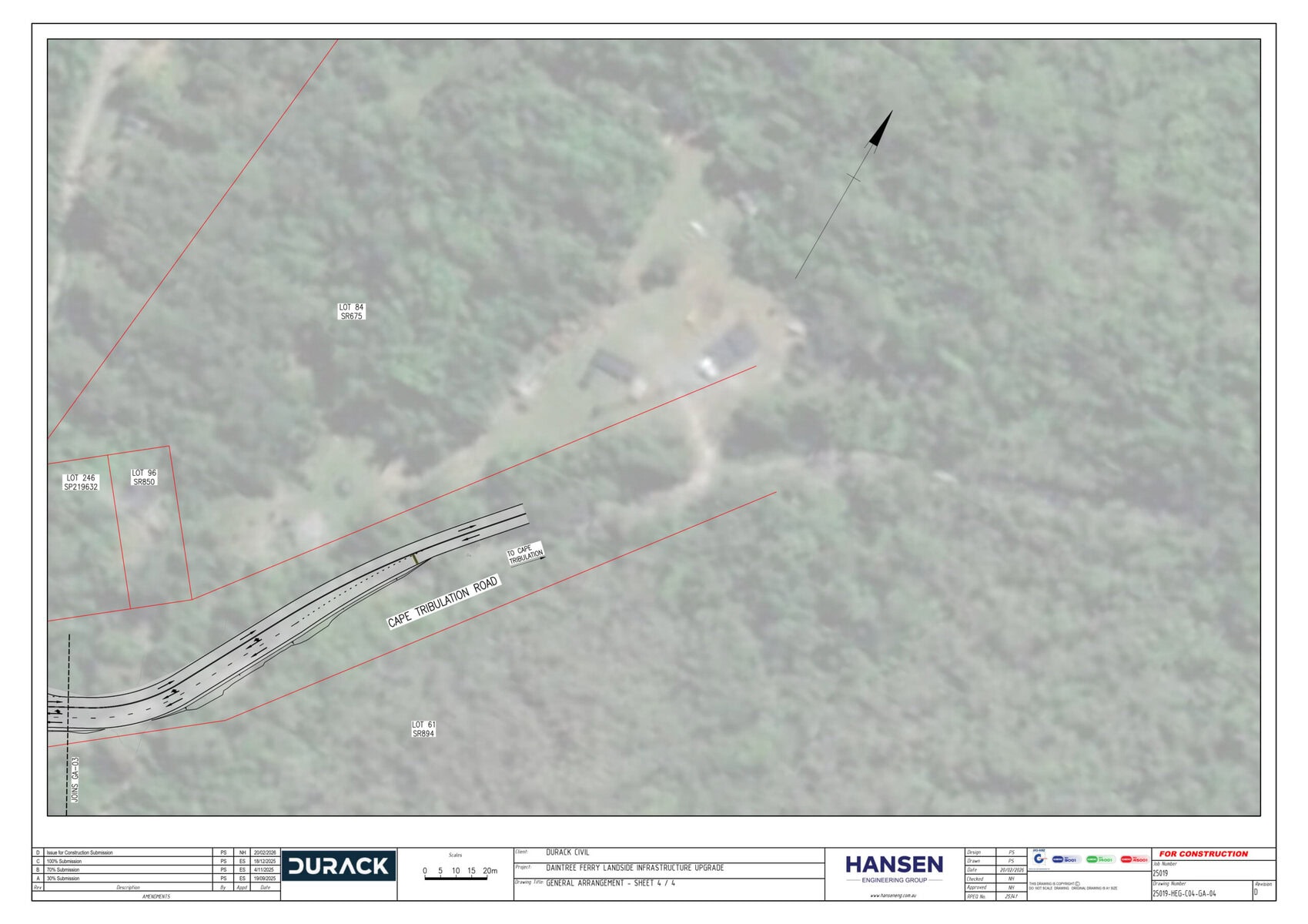
Concept Design Gallery: Use the arrow below to change image
Previous Consultation
Public Information Session Recordings – 20 November 2025
Douglas Shire Council Project Overview
Durack Civil (Landside Infrastructure)
Birdon Pty Ltd (Ferry Replacement and Operation)
Questions (see FAQ section below for full list of questions)
Media Releases and Community Updates
- October 2024 – New Daintree River Ferry to Reduce Waiting Times with Larger Vessel
- October 2023 – Search For New Ferry Supplier/ Operator Underway
- August 2022 – Council Endorses Daintree Ferry Replacement Project
- August 2022 – Daintree Ferry Crossing Solution – click here
- June 2022 – Daintree Ferry Northern Ramp Replacement
- September 2021 – Daintree River Ferry Probity Report – click here
- May 2021 – Daintree River Ferry Service Contract – click here
- May 2021 – Daintree Ferry Purchase – click here
- November 2020 – Compass Research Report – Bridge/Ferry Survey – click here
- November 2020 – Bridge Or Ferry Submissions – click here
- August 2020 – Daintree River Crossing Options Assessment Report – click here
Council Meeting Reports
Frequently Asked Questions
What is this project about?
Council is upgrading the roads and ferry ramps on both sides of the Daintree River to prepare for a new, higher-capacity ferry. These works will reduce wait times, improve traffic flow, and support local residents, services, tourism, and school travel.
Why did Council choose a ferry over a bridge?
Extensive community engagement and traffic modelling were carried out across several stages. Of the 3,409 survey responses, 66% preferred an improved ferry service while 33% preferred a bridge. The outcome showed that a larger, dual-loading ferry with landside upgrades was the most practical and widely supported option.
When will construction begin?
Landside works will start after the 2026 wet season (expected May 2026), with the ferry ramp replacement and new ferry commissioning planned for late 2027.
Will the ferry still operate during construction?
Yes. The ferry will continue to operate throughout the project, except during a planned closure period of approximately 10-14 days in late 2027 for concrete ramp removals and reconstruction of larger concrete ramps and ferry commissioning.
How long will the ferry service be interrupted?
The vehicle ferry service will be offline for a minimum of 10 days. This timeframe includes ramp removal, pylon checks, new ramp installation, ferry positioning, and river trials. Engineering efficiencies have significantly reduced what would have been a potential 40-day closure.
Will there be a replacement service during the closure?
Yes. A free pedestrian ferry will run continuously during daylight hours. Council will also provide shuttle services to and from designated car parks on both sides of the river, with managed parking to support both locals and visitors. Parking and shuttle locations will be confirmed closer to the closure period.
What improvements will the new ferry deliver?
The new ferry will have dual loading and unloading lanes, reducing queuing times. It will also support a new priority lane system on both the south and north side of the river for locals and concession card holders and improved traffic management for tourism vehicles and services.
What road changes are being made?
South side: New lanes, relocated ticket booths, and better queuing for all vehicles.
North side: New priority lanes, extended disembark areas, and a designated bus collection zone.
Will Council profit from the new ferry?
No. Under Queensland law, Council cannot make a profit from ferry fees. All funds from ticket sales must be used to operate and improve the ferry service and associated infrastructure.
Will the ferry price change?
Council reviews pricing annually in line with CPI and operating costs. Any changes are part of this regular review process and must reflect service delivery costs.
Is the new ferry service financially sustainable?
Yes. The new ferry and service have been modelled over a 20-year period, factoring in projected usage, CPI increases, and minor ticket pricing adjustments. This modelling indicates the service will be sustainable over the long term.
Will any trees be removed for this project?
Yes. A number of trees will be removed for the south approach road realignment and on the northern approach to create a locals’ priority lane. No trees will be removed for the new ramps, which will be in the same location as the existing ones.
Will any mangroves or marine plants be removed?
No. The ferry will continue to operate in the same location, and no mangroves or other marine plants will be disturbed during the ramp works or ferry replacement.
How long will the new ferry take to build?
The new ferry is being designed and built by Birdon Pty Ltd in Port Macquarie, with construction expected to take up to two years. It will then be towed to the Daintree River over seven days (weather permitting), with delivery scheduled by the end of 2027.
Will the community be consulted?
Yes. Community updates and engagement are a priority. A Daintree Ferry Landside Infrastructure Reference Group is being formed, and Council will share progress updates, timelines, and closure dates well in advance. A full communication program will support locals and businesses throughout.
Will car parking be affected at the boat ramp?
No. Existing car parking at the boat ramp will be retained as part of the project.
How will traffic lanes, priority access and wayfinding work on both sides of the ferry?
Priority lanes will operate on both sides of the river and will be clearly identified through signage and road markings. Lane markings will comply with road regulations and include additional guidance to help all drivers, including visitors, use the correct lanes safely.
How will traffic, buses and safety be managed on the northern side of the ferry?
The design includes traffic calming, improved entry and exit points, bus parking and lane configuration to address long-standing safety and congestion concerns. Bus movements and turning areas are being reviewed as part of the design to improve safety and traffic flow on the northern side.
Will the new approach works improve access during flooding?
When roads are flooded, access to the ferry is not possible. The new works improve efficiency in normal conditions but do not change flood constraints. The ferry does not operate during extreme weather events and flooding.
Before TC Jasper, ferry closed early – will there be a plan in future?
Safety will always come first. The ferry must be secured during daylight hours before river conditions deteriorate. Early communication will continue, and residents are encouraged to activate their own cyclone plans early.
What are the agreed operational days of the new ferry contract?
The ferry will continue to operate on the same scheduled days as the current service, excluding emergency events.
How often are AMSA surveys required and how long will closures last?
AMSA surveys are required every five years. While some pre-survey work will occur in water, the ferry must be hauled out to meet regulatory requirements. The ferry will be offline for approximately 14 days to complete the mandatory survey.
When will the first AMSA survey occur and how much notice will be given?
The first survey will be schedule 5 years from the date of commencement of the new ferry (around 2032). Surveys can be scheduled up to two years in advance, allowing at least 24 months’ notice where possible.
When will ferry design plans be released publicly?
Designs will be shared after regulatory approval, noting some drawings may not be released due to intellectual property considerations.
Will the larger ferry require significantly more dredging, and what approvals are in place?
No significant increase in dredging is required. Although the new ferry is wider and heavier, it will have a similar draft to the existing ferry, so additional weight does not automatically mean deeper dredging is needed. Some initial dredging will be required to accommodate the wider vessel. All required approvals are being progressed through the State Assessment and Referral Agency in consultation with relevant State Government agencies.
Will Council adhere to State dredging approvals?
All dredging works are managed in accordance with State approvals and will continue to be overseen by Council operations staff in accordance with conditions.
Will the new ferry be quieter, including engine and PA noise?
The new ferry includes acoustic insulation and modern engines, which are typically quieter. PA announcements are mandated for safety but will be reviewed and minimised where possible.
Can the ferry operate independently if a cable fails?
The ferry does not have independent propulsion. The movement of the vessel if a cable breaks will depend if it’s the cable on the drive wheel side and localised weather/tide conditions.
Will wider ramps bow under load?
Ramp design accounts for maximum loading requirements and dual loading/unloading operations.
How will ticketing affect loading times?
Up to 189 vehicles can queue beyond the ticket booths. With a 36-vehicle ferry, ticketing will not delay loading.
Will there be a ticket booth on the northern side?
No ticket booth is planned, but spare conduit is being installed for future flexibility.
How long will the ferry be closed during ramp and cable replacement?
A full closure of approximately 10–14 days is expected. Both ramps will be replaced at the same time, with passenger ferry and shuttle services provided throughout the closure.
What if ramps are built before the ferry arrives?
The new ferry will be pre-positioned before ramp works begin. Existing ramps will not be removed until the ferry arrives.
How will reliability be maintained during the transition period?
Nightly inspections, locally sourced and stored spare parts and Birdon’s backup shipyards will reduce the risk of breakdowns.
How will ticketing and service updates be communicated?
Updates will be posted to the Daintree Ferry website (daintreeferry.com.au) and Facebook page managed by Birdon.
During summer, will staff have shelter?
Staff shelter and heat protection are being incorporated into the ferry design.
How disruptive will landside infrastructure works be?
Works will generally occur under single-lane closures with traffic management. Limited night works may be considered if noise impacts can be managed.
How many extra vehicles are forecast to cross annually?
Traffic modelling assumes approximately 1% annual growth supported by the upgraded ferry and infrastructure.
What share of ticket revenue does Birdon receive?
Contractual revenue arrangements are commercial in confidence.
How much money is in the ferry reserve?
Ferry revenue is managed through Council’s consolidated revenue and considered as part of annual budget processes.
How can I get more information or ask a question?
- Phone: 4099 9444
- Email: enquiries@douglas.qld.gov.au
- Web: Daintree Ferry Infrastructure & Replacement Project – Douglas Shire Council
How will Council keep us informed?
- Project updates on Council’s web page
- Direct emails and SMS
- Social media updates
- Reference Group discussions and community meetings and drop-in sessions
- Signage on site and along ferry approaches
How Can I Stay Informed?
There are several ways to keep up to date:
- Project updates on this page
- Keep up to date with the Daintree Coast Community Update page
- Here you can read the meeting notes for the Daintree Coast Community Reference Group
- Subscribe to the Daintree Coast Community Updates newsletter
- Subscribe to SMS alerts – for urgent access messages (road closures, unplanned interruptions to ferry service, etc)
- Douglas Shire Council social media
- Works notices (sent to the Daintree Coast Community updates subscribers
Have a Question?
Douglas Shire Council is committed to keeping the community informed throughout construction.
If you have a question, suggestion or feedback about the project, we’d love to hear from you.
📞 (07) 4099 9444
Ferry Statistics
Council has been collecting data on the usage of the Daintree Ferry since 2004. Below you’ll find graphs depicting total annual ticket sales of one-way and return traffic for the two most popular vehicle types using the ferry.
Council also records data for a variety of other vehicle types, concessional travel and multi-day tickets.